
SOLD! 13 Browning Avenue
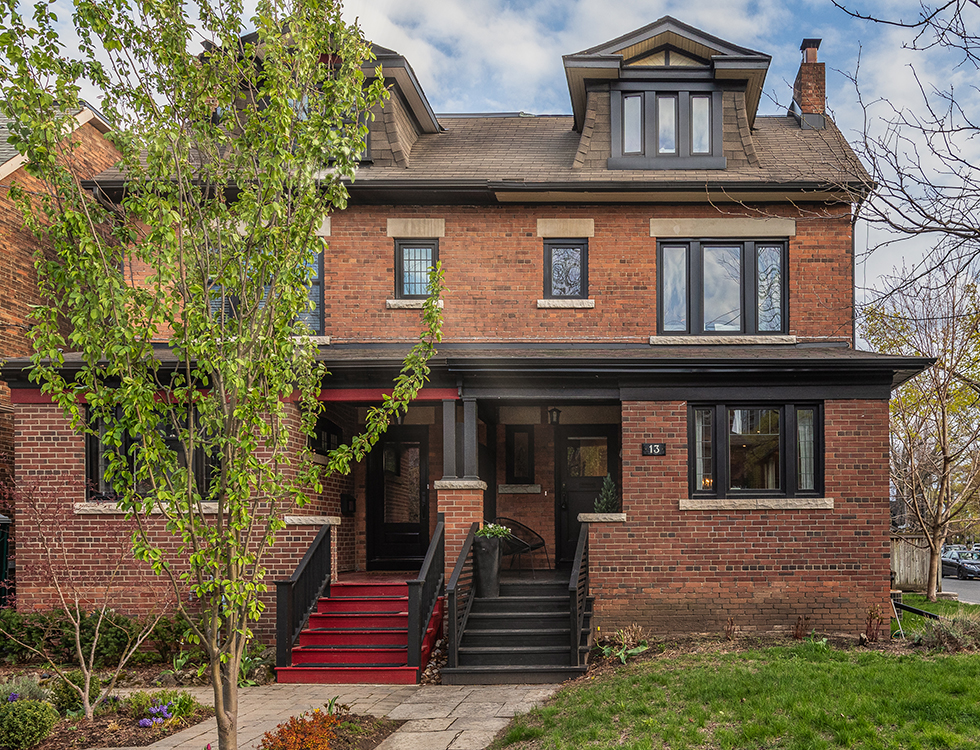
Congrats to our amazing clients who just beat out the competition with a bully offer and bought this stunning 4 bedroom home in Playter Estates!

Toronto Real Estate Speculators Causing a GTA Market Bubble?

There’s been a lot of talk of a “housing bubble” in the Greater Toronto real estate market. Many pundits are talking about speculators – domestic investors fuelling an already overheated market. RE/MAX looked at just over 5,000 individual freehold transactions in the GTA between March 15, 2019 and March 14, 2021 and found that less than 2% of sales were repeated in that time period, leading to the conclusion that speculators are not a significant factor driving the current market and rising prices.
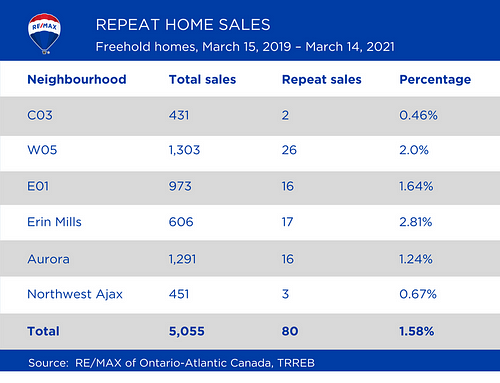
RE/MAX examined home-buying activity in six Greater Toronto Area neighbourhoods – C03, W05, E01, Erin Mills, Aurora and Northwest Ajax – on properties priced between $500,000 and $1,499,999.
Of the 1.58% transactions between March 2019 and March 2021 that were repeat sales, only approximately 20% of these indicated that renovations were made between sales.
Wrong Conditions for Speculators
Investors tend to wait out hot markets, preferring to buy when prices are down and sell when they’re up again. Those who are looking for short-term investment opportunities in the Toronto housing market (and in many other Canadian regional, for that matter) will be hard-pressed to find them under current conditions.
Bully offers and bidding wars are commonplace in the current market, with demand outpacing supply in virtually all areas of the GTA and the winner buyer paying top dollar. The current environment is simply too hot for investors and builders.
There may very well be some investment/speculation occurring in the GTA condo market, as pricing dropped in tandem with condo sales, but investors have always played a role in the condominium market so this isn’t entirely surprising. That’s unlikely to end anytime soon.
RE/MAX Brokers Say Homebuyers Are Not Speculators
RE/MAX brokers in the GTA were clear that there is no speculation in the market at this point. We took our research a step further and conducted an online survey of RE/MAX brokers and agents in Western Canada, Ontario and Atlantic Canada. A landslide 96% confirmed that the majority of homebuyers are end users, while only 4% were classified as speculators. With a freehold market that’s being driven by end users, upward pressure on housing values is often a function of limited supply.
If Not Speculators, Who (Or What) is Driving Toronto Real Estate Prices?
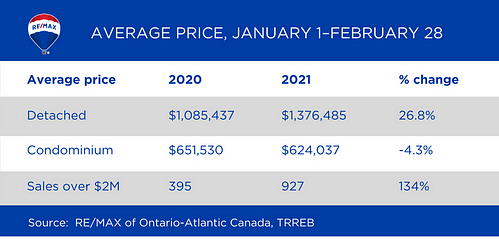
There are many other factors that may be contributing to the dramatic price growth across the Canadian real estate market. Covid-19 prompted a spike in sales of single-detached homes at a time when condominium sales have dipped, and prices of detached homes are traditionally higher than condominiums. We’ve also seen an uptick in the luxury freehold market, with sales over $3 million posting their best year on record in 2020. All of these factors tend to skew prices higher.
To illustrate, this data table depicts the average prices for detached homes and condominiums from January 1-February 28, 2021, according to the Toronto Regional Real Estate Board.
The Market is Self-Regulating
After some concerns of overheating earlier in the year, there has been a shift in the market activity in recent weeks with more detached inventory coming on-stream. In areas north of the 416, the increase in new listings appears to be meeting demand, with fewer bidding wars taking place. Evidence of this can be found in the number of listings that have been cancelled and reintroduced to the market at a higher price point. The 416 also reported growing inventory levels.
Covid-19 fatigue is playing a role as well, with some purchasers taking a step back from the heated market conditions experienced during the second half of 2020 and in the first quarter of 2021.
The Future of Canadian Real Estate
What’s in store for Toronto real estate, and Canada as a whole? While it’s difficult to predict the market with the uncertainty around Covid-19 and the economy, we expect domestic buyers to continue to be active in the market, due to a number of factors.
Interest rates are playing a major role in spurring home-buying activity, as buyers scramble to take advantage. The government is committed to low interest rates until the “economic slack is absorbed.”
Equity gains are inspiring existing homeowners to trade up to larger homes or better neighbourhoods – both in and outside of the city.
Pent-up demand is also a going concern. For every bidding war, there is a handful of disappointed buyers. They’re still out there, and they’re still hoping to buy a home.
Savings have grown year over year, and some purchasers are sitting on a substantial amount of money. With traditional “safe” investment vehicles like GICs yielding next-to-nothing returns, and stock market risks, many are choosing to invest in their principal residence. The Bank of Canada says savings rose to $180 billion in 2020. Statistics Canada says that the household savings rate was at 14.6% in Q3 2020 and economists estimate that figure will be 13% in the Q4 and continue into 2021. To put that number into context, the average savings rate in 2019 was 1.4%.
Strong economic growth is expected as the vaccine rolls out and confidence returns to the market.
Immigration will ramp up, with an anticipated 401,000 new Canadians coming this year, another 411,000 in 2022, and 421,000 more in 2023. The February 13 Express Entry draw invited almost 28,000 candidates to apply for permanent residence.
Source: blog.remax.ca
5 Things you can do today to increase your home’s value
Start Rollin’
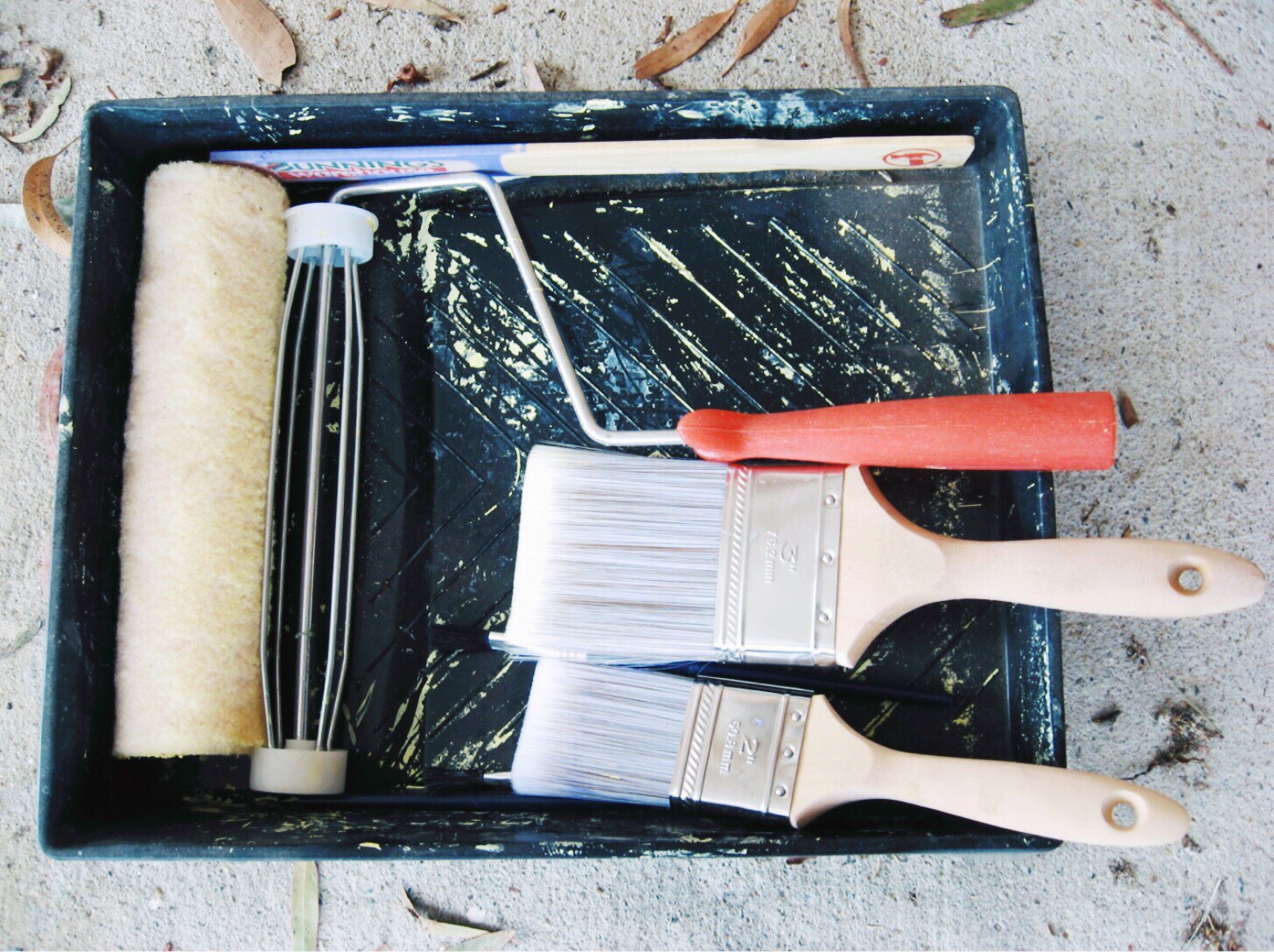
One of the simplest, most cost-effective improvements of all is paint! Freshly painted rooms look clean and updated. When selecting paint colours, keep in mind that light neutrals appeal to the greatest number of people, therefore making your home more desirable. On average, a gallon of paint costs around $25, leaving you plenty of money to buy rollers, painter’s tape, drop cloths and brushes. So buy a few gallons and get rollin’!
Get Dirty
The power of curb appeal is real. Keep your lawn looking good with regular mowing and clean-cut edging. Low-maintenance landscaping saves you money now and adds value when you sell. It’s no question that shrubs and colourful plants will add curb appeal to any home, but when shopping at your local garden center, make sure that you “think green.” Purchase plants that are native to our region or plants that are drought-tolerant; these require less water and maintenance, which means more savings to you and more green in your wallet.
Swap ‘em Out
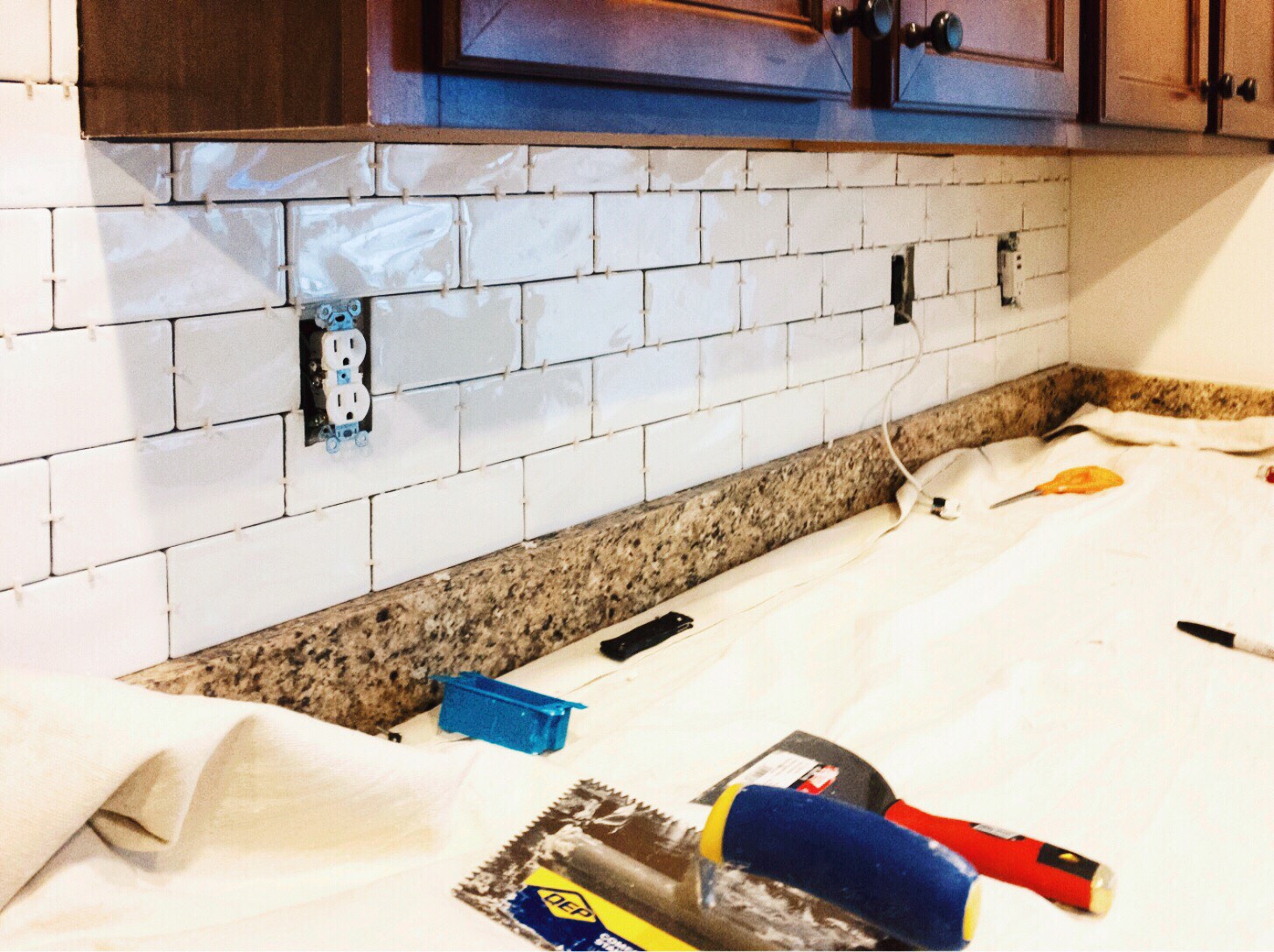
Kitchen and washroom renovations can easily cost thousands, so focus on the smaller, more manageable projects. Consider painting your old cabinetry to instantly brighten the space. Replacing the hardware will also make your cabinets look newer and more modern. The backsplash is another design feature that resonates with buyers. When choosing tile, stick with neutral tones and an unfussy design — white subway tile is classic for a reason.
Set the Mood
Nothing kills a mood faster than bad lighting, and if you want to show your home in the best light you will have to do exactly that! A quick and affordable fix is to install light-control dimmers on switches. Not only does this add drama and ambiance in areas such as the dining room and bedrooms, it is also good for energy efficiency. Lighting is particularly important in the bathroom, where it should be warm and bright. Keep lighting even around mirrors to prevent unwanted shadows when you are shaving or applying makeup.


Clean Up, Aisle 5
It seems obvious, but one of the most important things you can do to boost the value of your home is to clean it up. Remember that potential buyers want to see a blank canvas and picture themselves in it. Do a hardcore decluttering session and divide everything you truly don’t need or use into “donate,” “toss” and “sell” piles. With your “sell” items, throw a yard sale or post items on Kijiji to make some extra cash to fund your home improvement projects.
Homegrown marijuana may have a real estate cost
Homegrown marijuana may seem like a good idea with legalization throughout Canada happening on October 17, 2018. Yes, it will be legal, but this doesn’t come without risk. Read on to see what the Globe and Mail has to say.

The national organization representing home appraisers is warning that growing cannabis at home will soon be legal, but it still comes with a risk.
The new law legalizing cannabis includes allowing Canadians to grow a maximum of four plants in their homes. Keith Lancastle, chief executive of the Appraisal Institute of Canada (AIC), is calling on the federal government to help educate homeowners on what he calls the dangers of growing at home.
“The challenge with cultivation of homegrown marijuana, is the ability of the plants themselves to get so large given the right amount of light and moisture,” Mr. Lancastle said. The impact of four cannabis plants is more akin to setting up a greenhouse for hothouse tomatoes, he says, than simply having four sizable houseplants. “Humidity is a byproduct of normal growth and it could well become an issue for the property. You either deal with moisture damage or potentially mould. If you had mould that ran amok … you hear the horror stories of people having to take houses right down to the studs and starting over again [for remediation] – although that would be an extreme case.”
Realtors, insurers, rental property owners and even some provinces have sounded off on the risks of homegrown marijuana in a residential spaces. Some have pressed for outright bans on the practice.
Alberta’s Boardwalk Communities, one of the province’s largest corporate landlords, recently banned not just growing but also smoking and even eating cannabis products in its apartments. The provinces of Manitoba and Quebec have included in their cannabis legislation provincial offences that would fine anyone who attempts to grow at home. The federal Minister of Justice, Jody Wilson-Raybould, has said the Liberal government would not take those provinces to court over their home-growing regulations, but said she couldn’t do anything about a private citizen choosing to contest those laws.
In Ontario, the cannabis bill introduced by the Progressive Conservative government focused on privatizing cannabis retailers, but it left aside the issue of homegrown marijuana.
“Our point of view is, let’s hit the pause button on legalizing grow-at-home operations until we have some foundational elements in place,” said Tim Hudak, president of the Ontario Real Estate Association and a former leader of the Ontario PC Party. Under Mr. Hudak, OREA has been lobbying hard to urge different levels of government to slow down the expansion of home cultivation until things such as home-inspector retraining and municipal registries for illegal grow operations can be increased.
He was unable to persuade the federal government to block tenants or owners in multi-residential buildings from home cultivation, but he hopes the Ontario government will join Manitoba and Quebec in an outright ban.
“There’s still a lack of clarity around how mortgages and insurance are going to work if you choose to grow marijuana in your home,” Mr. Hudak said. “And you can bet your bottom dollar that one of the first questions home buyers are going to ask, going forward, is if marijuana was grown in the home.”
Mr. Hudak also pointed to polling data from Nanos Research, which in a September, 2017, survey of 500 Ontarians found 60 per cent of respondents were “concerned” with the potential for property damage related to home-grown cannabis.
Mr. Lancastle says appraisers will have to tread a fine line in dealing with homes where cannabis is in cultivation. Appraisers are barred from sharing personal information about a homeowner discovered during a home inspection.
“The mere presence of marijuana could be considered private information and, therefore, should not be disclosed,” Mr. Lancastle said, citing directives the AIC has received from the Office of the Privacy Commissioner. There is one exception: “If there’s a detrimental condition – mould, water damage, so on and so forth – that is attributable to marijuana, it is acceptable to take a picture.”
One analogue for the kinds of personal or sensitive conditions appraisers would be able to report on might be a room with stripper poles or other acrobatic equipment.
“We’ve had situations where people have gone in and had trapezes and harnesses in the room and all sorts of toys,” said Mr. Lancastle. “If there’s a trapeze hanging from a joist and it’s clear it has caused buckling in the roof, that becomes something that’s a measurable adverse impact on the value, because there’s a cost associated with returning it to marketable condition.”
source: globe and mail